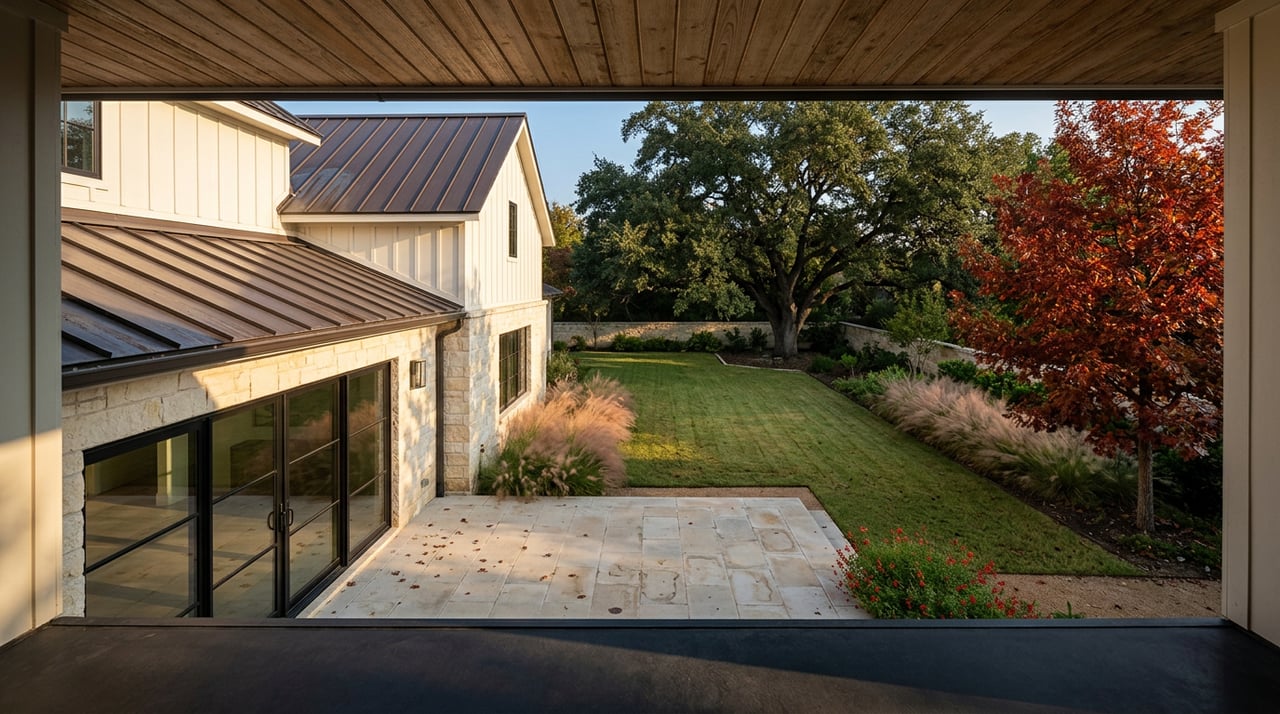
Goodwater Loop Trail at Lake Georgetown: Fall Access With Jim Hogg Closed
September 24, 2026
September 24, 2026
If you've hiked or biked around Lake Georgetown for more than a season, you probably have a default. For a lot of people north and east of downtown, that default is Jim Hogg Park: pull off FM 2338, park at the north shore, walk or ride a stretch of the Goodwater Loop, and be back in the truck before lunch. It's the biggest of the lake's Corps-run campgrounds, with 142 reservable campsites and the most parking of any gate on the water.
That default stopped working on July 20, 2026. The U.S. Army Corps of Engineers closed Jim Hogg Park to repair its sewer distribution system. The campsites don't offer sewer hookups, and as of this fall there's still no posted reopening date on the Corps' own Lake Georgetown site.
That closure lands at an odd time, because fall is when this trail is actually worth doing. The heat breaks, the algae dies back, the water cools enough that boat traffic thins out, and the 26-mile loop around the lake stops being a test of heat tolerance and starts being what it's supposed to be: a genuinely good walk through juniper forest, limestone outcrops, and open grassland thirty minutes from your driveway. The people who wait all year for this trail are waiting for October, not July. And the one gate most of them would use by habit is the one that's shut.
Here's what the closure actually does to your options, and it's more specific than "one park is closed." The loop's three main campground gates sit at Cedar Breaks Park on the south shore near the dam, Jim Hogg Park on the north shore at roughly mid-lake, and Russell Park further northwest. Jim Hogg sat in the middle of that arrangement, geographically and functionally. It's what let someone do a manageable out-and-back from the north side without committing to the full loop or driving all the way around to Cedar Breaks.
With Jim Hogg out, the trail effectively lost its midpoint access. Anyone who used to split the loop into a north-half day and a south-half day now has to choose between the two remaining gates, both of which sit at the ends rather than the center. That's not a minor inconvenience. It changes which stretch of trail you'll realistically hike this fall, and it changes how crowded Cedar Breaks and Russell are likely to get on the weekends everyone's been waiting for since June.
Cedar Breaks is the busier of the two remaining options, and for good reason. It's the closest gate to town, it has the most amenities, and trail reports consistently point to campsites 33 and 35 for the best lake views if you're pairing a hike with an overnight. A day-use fee of about five dollars gets you into the trailhead lot, or you can park free just outside the gate and walk in. Reviewers who've hiked the full loop in a single push tend to recommend starting here specifically because the roughest terrain, the boulder-strewn stretch between mile markers 5 and 7, is easier to tackle in the cool of early morning than at the end of a long day.
Russell Park is the quieter alternative, and it's also the one that's changed the most in recent years for a different reason. Volunteer trail crews from the Austin Ridge Riders and the International Mountain Bike Association have expanded the trail system beyond Russell, which means that stretch has gone from an afterthought to something closer to a real cycling corridor. If you're hiking rather than biking, that's worth knowing before you show up expecting solitude. The tradeoff for the added mileage is more bike traffic sharing a trail that wasn't originally built with heavy cycling in mind.
The middle third of the trail, between Tejas Camp and Russell Park, is the section most people underestimate. The Corps' own trail literature and independent hiker accounts agree on the broad strokes: the north shore stretches are flatter and less technical than the south side, running along wide fire roads that gently roll for miles before the terrain firms up again. That sounds easy until you notice there's almost no shade out there. In August that's a liability. In late October, with highs settling into the 65 to 85 degree range and nights dropping into the 40s and 50s, it's actually the most pleasant few miles on the whole loop.
Tejas Camp itself is worth building a hike around even if you're not doing the full 26 miles. It's a popular fishing spot, it has the only bathroom directly on the trail, and it's where the loop crosses to the north shore over a small bridge shared with light auto traffic. Hikers doing multi-day trips tend to treat it as a natural overnight stop between the rockier southern miles and the flatter northern ones. With Jim Hogg closed, Tejas becomes a more useful pivot point than usual, since it's roughly equidistant from both remaining gates.
A few practical notes carry more weight this fall than they normally would, precisely because more traffic is being funneled through fewer entry points. Payment at any of the lake's parks is entirely online now. Cash isn't accepted at any gatehouse, and passes have to be purchased in advance through Recreation.gov or by scanning a QR code at the entrance. Gatehouses run Friday through Sunday, 10 a.m. to 6 p.m., through the end of September, then shift to reduced winter hours, so anyone planning an October weekend should check ahead rather than assume the same hours that worked all summer. And more than one camper at Cedar Breaks has flagged rattlesnakes along the rockier sections, which is a reasonable thing to plan around rather than worry about.
If you're picking a starting point this fall, the honest answer depends on what you're after. Cedar Breaks gives you the toughest terrain up front, the best lake-view camping, and proximity to town, but expect more competition for weekend sites now that it's absorbing traffic that used to split toward Jim Hogg. Russell gives you quieter trail and easier terrain, but you'll share more of it with mountain bikes thanks to the newer trail work. Neither one replaces what Jim Hogg offered, which was a genuine middle option. Until the Corps posts a reopening date, the loop's three main campground gates are temporarily down to two, and that's worth knowing before you drive out expecting your usual spot.
None of this changes property values or school zones or anything a spreadsheet would care about. It changes how you spend a Saturday. Lake Georgetown and the Goodwater Loop are part of what makes living on this side of Williamson County feel different from living closer to I-35's retail corridors, and a big access point going dark for an undetermined stretch is the kind of thing that's easy to miss unless you're the one showing up to a locked gate. Fall is short in Central Texas. Knowing where to actually park before you drive out there is worth more than knowing the trail exists.
If you're already settled into life near the lake and this is the kind of local detail you want to keep hearing about, whether it's trail access, park construction, or the next thing that changes how a Saturday here actually works, that's the kind of ground-level knowledge The Right Team tracks for clients long after closing. And if a friend or family member mentions they're thinking about a move to this side of town, we're always glad to be the call that connects them to what living here is actually like. Schedule a Consultation whenever that conversation comes up.
Stay up to date on the latest real estate trends.
Working with The Right Team means gaining lifelong advisors who care deeply about your success. We don’t just help you buy or sell—we stand beside you, advocate for you, and celebrate your journey every step of the way.