Georgetown Home Maintenance Checklist by Season
April 16, 2026
April 16, 2026
If you own a home in Georgetown, an annual home checkup is not just a nice idea. It is one of the smartest ways to protect your property from Central Texas heat, hail, drought, and sudden heavy rain. When you know what to look for each season, you can catch small issues early, avoid bigger repair bills, and stay better prepared for resale down the road. Let’s dive in.
Georgetown homeowners deal with a mix of weather patterns that can be hard on a house. According to the City of Georgetown Hazard Mitigation Plan, local risks include flash flooding, drought, and damaging hail.
That is why a generic maintenance list often misses the mark. In Georgetown, your annual checkup should focus on water management, storm damage prevention, and cooling-system reliability. A seasonal approach usually works better than a simple once-a-year checklist.
If you ever sell, the same issues that affect daily comfort also tend to stand out during inspections. Roof condition, drainage, foundation movement, HVAC performance, and visible signs of moisture problems are some of the first things people pay attention to.
That makes routine maintenance more than basic upkeep. It is also part of protecting your home’s value and reducing surprises later.
This is one of the best times to walk your property carefully. The nearby Austin climate summary from the National Weather Service shows the average last freeze is usually in mid to late February, but late freezes can still happen, so freeze protection often needs to stay in place into early spring. You can review that pattern in the Austin climate summary.
Start outside and look for anything winter weather may have stressed. Pay close attention to cracked caulk, loose shingles, separated gutters, and exposed pipes.
This is also a smart time to confirm that any pipe protection is still in place where needed. Texas A&M AgriLife Extension guidance recommends preparing pipes before the first freeze and keeping protections in place through March or April.
After winter weather and before spring storms ramp up, inspect your roofline from the ground. Look for missing shingles, bent flashing, damaged fascia, or anything that seems out of place.
Gutters and downspouts matter here too. ENERGY STAR’s homeowner guidance notes that clogged gutters can overflow and cause water damage, so a spring cleaning is worth the effort.
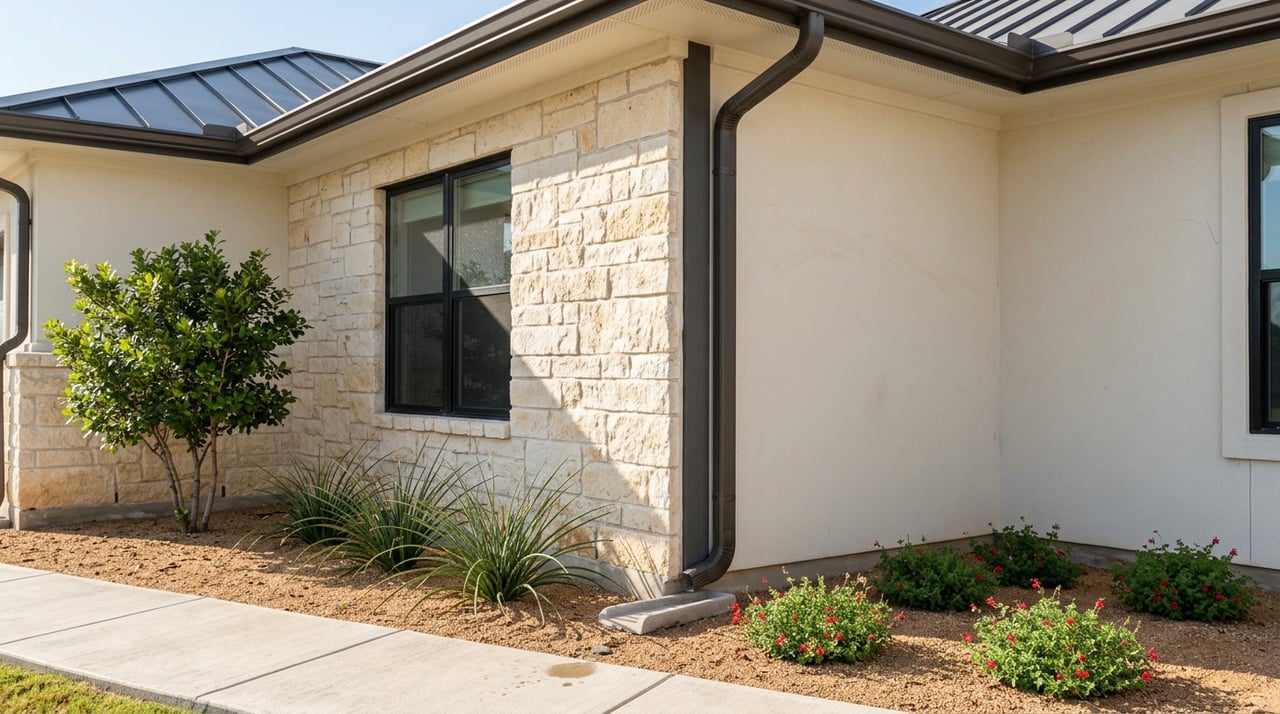
As you walk the perimeter, notice whether water appears to pool near the slab. The Department of Energy and ENERGY STAR guidance recommend directing roof runoff to sloping grade more than 5 feet from the foundation, or to an underground catchment system more than 10 feet away, which helps reduce moisture buildup near the home. This moisture-control principle is also reinforced by Building Science Education resources on gutters and downspouts.
If you see standing water, erosion, or splash areas near the foundation, move that issue up your list. In Georgetown, drainage is not something to put off.
Before summer arrives, check caulk and weatherstripping around windows, doors, and plumbing penetrations. The Department of Energy explains that caulk works for stationary gaps under one-quarter inch, while weatherstripping is used for moving parts like doors and operable windows.
This simple step can help keep conditioned air inside and reduce the chance of water intrusion around problem areas. It is a small project that can make a noticeable difference once the heat sets in.
By late spring, Georgetown homes shift into heat-management mode. The Austin climate summary shows temperatures typically reach 90°F by late May and stay above 90°F well into September, with the average first 100°F day around early July.
If there is one appointment to schedule before summer, this is it. ENERGY STAR recommends annual pre-season HVAC service and monthly filter checks because dirty filters can raise energy costs and put extra strain on equipment.
Ask your technician to inspect the condensate drain as well. Both ENERGY STAR and DOE guidance note that clogged drains can lead to water damage, which is an easy issue to miss until you spot staining or moisture indoors.
Summer drought can be tough on Georgetown properties, especially slab-on-grade homes. The Texas Real Estate Commission notes that Texas clay soils expand and contract with moisture changes, and poor drainage, erosion, leaks, roots, and flooding can all contribute to foundation movement.
During the hotter months, keep an eye out for:
If you notice a pattern rather than a one-time cosmetic crack, it may be time to bring in a licensed professional.
Georgetown’s hazard planning highlights recurring drought conditions and the possibility of water restrictions. That makes irrigation efficiency just as important as irrigation volume.
Rather than overwatering, review sprinkler coverage and scheduling. AgriLife’s Water My Yard resource is a helpful tool for weekly watering recommendations based on rainfall and evapotranspiration data.
Branches that hang over the roof can become a bigger issue during spring and summer storms. ENERGY STAR recommends checking branches as part of regular home maintenance.
In Georgetown, that matters even more because severe weather from March through May can bring large hail and strong winds. After any hailstorm or wind event, inspect the roof, trim, and gutters quickly and document visible damage before a small problem turns into a leak.
Fall is your reset season. Once temperatures ease up, it is a good time to prepare the house for cooler weather and take care of a second round of exterior maintenance.
A second gutter cleaning after leaf drop is one of the most useful tasks on your list. If water cannot move properly through the system, overflow can damage trim, siding, and areas near the foundation.
Also check that downspouts still direct water away from the home. In an area with flood risk and storm runoff, this step carries more weight than many homeowners realize.
Fall is also the time to service the heating side of your HVAC system. Pre-season maintenance helps you catch worn parts early and reduce the chance of a surprise outage during a cold snap.
At the same time, test smoke and carbon monoxide detectors and replace batteries if needed. ENERGY STAR’s home maintenance guide recommends quarterly detector testing, annual battery checks, and monthly fire extinguisher checks.
Even though Georgetown winters are usually mild, exposed plumbing still deserves attention before freezing weather returns. Focus on vulnerable locations like attics, exterior walls, garages, and outdoor connections.
Getting ahead of this in fall is much easier than dealing with a burst pipe later. It is one of those tasks you hope you never need, but you are glad you did.
Some maintenance items are perfect for a homeowner checklist. Others should move quickly to a qualified pro.
Consider professional help if you notice:
That last point is especially important in Texas. TREC notes that wood-destroying insect reporting requires proper state licensing, and Texas is considered one of the states most at risk for termite activity.
If you want to keep this manageable, think of your annual home checkup in three parts:
That schedule lines up well with Georgetown’s real weather patterns and helps you stay proactive without feeling like home maintenance is a full-time job.
A well-maintained home is easier to live in now and easier to evaluate later if you refinance, protest value, or prepare to sell. It also gives you a clearer record of what has been addressed and what may need attention next.
If you want guidance on what repairs matter most, how maintenance affects resale, or how to plan smart updates before a future move, Clare Webb is here as a long-term resource. That is part of the value of having a real estate advisor who comes with the house.
Stay up to date on the latest real estate trends.









Working with The Right Team means gaining lifelong advisors who care deeply about your success. We don’t just help you buy or sell—we stand beside you, advocate for you, and celebrate your journey every step of the way.